

When Presuming Competence Becomes Conditional: A Call for Reflection Among Allies

I’ve been thinking a lot lately about how this work all started. When this movement began, this quiet, powerful shift toward presuming competence, we were all on the same side. We were the ones who said:
No more proving intelligence before accessing it.
No more earning communication.
No more waiting for mastery before offering literacy.
We were united around one core belief: If a student cannot speak reliably, it tells us nothing about their thinking. That was the foundation. That was the revolution.

Yet recently, I’ve been watching a quiet shift...one I never expected from within our own community.
A New Kind of Standard
Some approaches in our field have begun moving toward increasing standardization: tight protocols, specific progressions, and scripted expectations for both practitioners and students.
The intention, I believe, is to create legitimacy and consistency. But the outcomes are becoming harder to ignore.
I’m hearing from families and practitioners who are being told:
they must follow a single progression in a specific order,
certain communication tools are off-limits until mastery is demonstrated on others,
and trying something different is discouraged, even when it better supports the student’s motor profile or regulation.
Isn’t that the exact mindset that pushed families out of schools and into our spaces in the first place? The same gatekeeping - just wearing different branding.
The Students Who Are Showing Up at My Door
Families are coming to us—not because they’re new to text-based communication, but because they were told: No.
No, you may not switch tools. No, your motor needs don’t fit the protocol. No, you can’t advance until you perform in a specific way. No, you can’t explore something different - not yet. Not until.
One parent recently told me, “We left the school system because they wouldn’t let my son access communication. Now we’re being told the same thing, but by the people who promised the opposite.” That sentence has not stopped echoing in my head.
The Harm No One Wants to Name
Here’s what I’m seeing, and I think it deserves our attention.
At recent workshops, practitioners arrived not energized to learn, but cautious. Not because they lacked experience - many were deeply committed educators - but because they felt uncertain about trying anything outside a very specific set of expectations.
Several shared that in prior trainings, they were corrected on small details:
how they held a communication tool,
the exact angle of their body,
the phrasing of their prompts.
Their hesitation wasn’t about the students in front of them. It was about avoiding mistakes. But when given space to ask questions, try different approaches, and respond to individual motor and regulation needs, something shifted:
People relaxed. Students engaged more naturally. Communication felt supported, not performed. It reinforced what many of us have believed from the beginning: growth happens in environments that allow for flexibility, not fear.
An Unintended Ripple Effect
There’s also a broader impact we need to acknowledge. School teams, already navigating limited training and high pressure, are hesitating around practices that are actually aligned with established AAC and literacy principles. In IEP meetings and team collaborations, I’ve seen reluctance toward:
reducing visual fields,
forward and backward chaining,
supporting motor planning,
offering grade-level aligned content to nonspeaking students,
and offering text-based communication from the start.
Not because the actual strategies lack merit or even an evidence base, but because they’ve become associated with controversy and specific brands instead of already entrenched best educational practices.
Instead of helping us increase acceptance in schools, increased rigidity may be making that work more difficult.
Remembering Why We Started
This movement didn’t begin with the goal of establishing a single pathway. It began to remove barriers, not replace them with new ones.
It began so that students could:
access communication without prerequisites,
learn without performing for approval,
and be supported as individuals, not as protocols.
Presuming competence cannot become conditional. It cannot depend on a specific posture, tool, or sequence. Our students deserve approaches that adapt to them - not approaches that ask them to adapt in order to participate.
The Space We’re Committed to Holding
At Reach Every Voice and through Communication for Education, we are focused on creating learning environments where:
practitioners can grow without fear of doing it “wrong,”
students can access multiple communication pathways,
and thoughtful flexibility is viewed as responsible—not risky.
We believe structure and integrity can coexist with responsiveness and creativity. There is room for consistency— but not at the expense of access or autonomy.
A Path Forward
This isn’t about calling out individuals or methods. It’s about asking an important question: Are we building systems that honor the principles we started with—or slowly drifting away from them?
If the heart of this movement was to open doors for nonspeaking students, then we must ensure we are not quietly closing new ones.
The work ahead requires:
honest reflection,
shared responsibility,
and a willingness to evolve without losing our roots.
We cannot become what we fought against.
The question isn’t whether students are capable. The question is whether we are brave enough to return to our roots and refuse to become the very system we set out to change.
The Importance of Community Support
As we navigate these challenges, it's crucial to remember the power of community. We need to lean on each other for support. Sharing experiences and strategies can help us all grow. After all, we are in this together.
By fostering a collaborative environment, we can ensure that every voice is heard and valued. This is essential for creating a truly inclusive space.
Conclusion: A Call to Action
Let’s commit to our original mission. We must advocate for practices that prioritize access and flexibility. Together, we can create a future where every student has the opportunity to communicate effectively.
Join us in this journey. Let’s ensure that our actions reflect our beliefs. Together, we can make a difference.
Reflecting on Our Journey
Looking back, I see how far we’ve come. The journey hasn’t always been easy, but it has been worthwhile. We’ve faced challenges, yet we’ve also celebrated victories. Each step has brought us closer to our goal.
It’s essential to remember the stories of those we serve. Each individual has unique needs and strengths. Their voices matter. They deserve to be heard and understood.
Embracing Change Together
Change is often daunting, but it can also be liberating. We must embrace new ideas and approaches. This doesn’t mean abandoning our core beliefs. Instead, it’s about evolving and adapting to better serve our community.
Let’s work together to create an environment where everyone feels empowered. By sharing our knowledge and experiences, we can foster growth and understanding.
A Vision for the Future
As we look ahead, let’s envision a future where every student has access to the tools they need to communicate. A future where flexibility and creativity are celebrated. Together, we can make this vision a reality.
Let’s continue to advocate for inclusive practices. Let’s ensure that every voice is valued and every individual is supported.
If you're ready to take the first steps to learning how to support ALL students with multimodal communication, no matter the methodology, check out our Accessible Academics course, a self-paced, life-time access course for parents and educators designed to open doors and break down barriers for just $99.
This blog, along with "*The Training I Wish I'd Had: Why Educators Need to Understand Autism as a Movement Difference," is part of an ongoing reflection on how rethinking our current practices creates space for change. It is also cross-posted at Communication For Education, our training and advocacy initiative dedicated to equipping educators with the tools and mindset shifts needed to support nonspeaking students. If you want to support this work, we invite you to donate to our REV AccessAbility Fund, which helps ensure that nonspeaking students and their families can access this kind of support regardless of financial circumstance
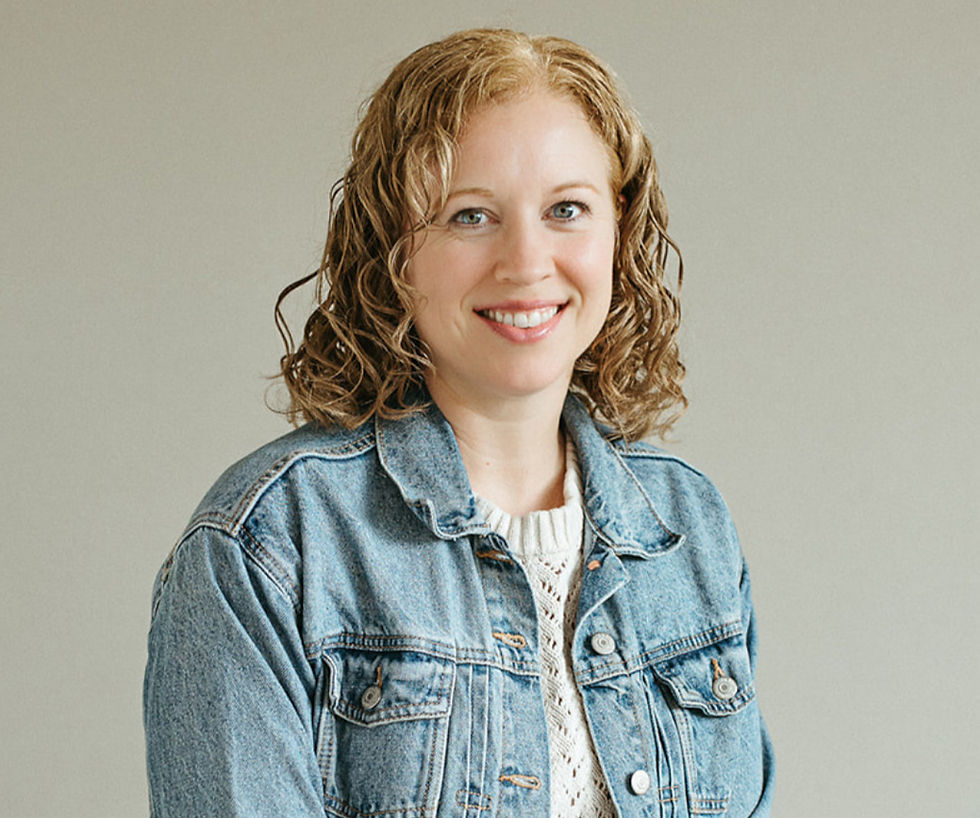
Lisa Mihalich Quinn, M.A / M.Ed. / MBA is a licensed special educator with more than 15 years of experience making academic content accessible for neurodiverse students and learners who use Augmentative and Alternative Communication (AAC). She is a former Maryland Public Schools teacher and the founder of Reach Every Voice, an organization dedicated to empowering individuals with communication access needs, and cofounder of Communication for Education, an online training program for people who support students using text-based multimodal communication in educational settings. Most recently, she has been working to lift the burden of content adaptation on parents and educators with the new transformative lesson adaptation tool, Adaptiverse App.
Lisa's passion for inclusion and equity runs deep, driving her work to help educators, learners, and families think creatively about how to reimagine systems that are historically resistant to change. She pushes folks to shift mindsets from "this is just how we do things..." and "we can't because..." to embody a spirit of "what if we tried..."


.png)

.png)


.png)


Comments